Quick Summary
Asbestos insulation was standard in homes built before the 1980s and remains present in many DFW properties today. Undisturbed material poses a lower risk, but deteriorating or disturbed asbestos releases fibers linked to serious lung disease. Professional testing, licensed abatement, and proper insulation replacement are the appropriate steps, in that order.
Older homes come with a lot of character, but some also carry risks that aren’t immediately visible. Asbestos insulation is one of them. If your home was built before the 1980s, there’s a reasonable chance it contains materials that were once considered industry-standard but are now known to pose serious health risks.
At CoreLine Insulation, we work with homeowners across the DFW area who face this situation. The questions we hear often come down to: what do I actually have, and what should I do about it?
This guide walks through what you need to know, from how to spot warning signs to what happens after a licensed abatement team clears your home.
What Is Asbestos Insulation and Why Was It Used?
Asbestos is a naturally occurring mineral that was widely used in construction from the 1940s through the 1970s. It was prized for its heat- and fire-resistant durability. Builders mixed it into insulation, cement, floor tiles, pipe wrapping, and wall materials. At the time, it seemed like an ideal solution.
The problem became clear over time. When asbestos-containing materials are disturbed, microscopic fibers get released into the air. Inhaling those fibers over time can lead to severe lung conditions, including mesothelioma. The damage often doesn’t show up until 15 years or more after exposure, which makes it particularly difficult to trace back to a specific source.
The EPA began restricting asbestos products in 1973 and has continued tightening those regulations over the decades. A 2019 rule went further, preventing previously banned products from re-entering the market. Modern insulation materials are all asbestos-free, including blown-in insulation, fiberglass batts, and spray foam.
Where Asbestos Insulation Tends to Hide in Older Homes
Knowing where to look is half the battle. Asbestos can show up in places homeowners wouldn’t think to check. Some of the most common areas include:
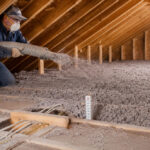
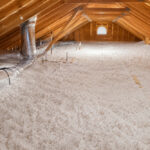
- Attic insulation: Loose-fill material that looks gray, brown, or off-white with a fluffy or granular texture. Homeowners sometimes added new insulation layers on top over the years without removing the existing insulation, making it easy to miss.
- Pipe wrapping: A white or gray material that resembles plaster or corrugated paper, found on old heating pipes in basements, crawl spaces, and utility rooms.
- Rigid insulation boards: Found in attics or walls, typically gray or white, and often used in older heating systems.
- Spray-on insulation: A textured coating applied to ceilings, beams, or walls, common in homes and commercial buildings from the mid-20th century.
One important note: the presence of these materials doesn’t automatically mean danger. Asbestos-containing insulation that is in good condition and completely undisturbed poses a lower risk. The problem starts when the material begins to deteriorate, crumble, or get disturbed during renovation work.
The One Rule You Should Never Break
Don’t touch it. It sounds simple, but it’s the most important safety consideration in this entire guide. Asbestos becomes dangerous when its fibers become airborne. Actions as routine as sweeping, vacuuming, or even pressing on a deteriorating material can release a cloud of invisible fibers into the air around you.
Mail-in DIY testing kits exist, but the risk isn’t with the lab. The risk is in how the sample gets collected. An improperly taken sample can create more exposure than doing nothing. A trained professional knows how to wet down the material and use proper containment to prevent fibers from becoming airborne during testing.
If your home was built before the 1980s and you’re seeing insulation that looks damaged, crumbling, or layered in ways you can’t fully explain, leave it alone and call a certified asbestos inspector.
How to Know If You Need Testing
You don’t need to test every older home for asbestos. Testing becomes necessary in specific situations:
- You’re planning a renovation that involves disturbing walls, attic spaces, or existing insulation
- There is visible damage to insulation or other building materials, such as crumbling drywall or deteriorating pipe wrapping
- You’ve discovered vermiculite in your attic, regardless of its condition
- You’re purchasing an older home and want a full picture of what you’re working with
If the materials in your home are intact and you have no plans to disturb them, the EPA generally recommends that testing isn’t required.
Choosing the Right Abatement Contractor
Not all contractors are equally qualified to handle asbestos. When vetting someone for this work, ask for documentation. A reputable contractor should be able to provide:
- Proof of accreditation and completion of federal or state-approved asbestos training
- A written contract that outlines the full scope of work, cleanup procedures, and compliance with local and federal regulations
- Written assurance at the end of the job confirming all procedures were followed
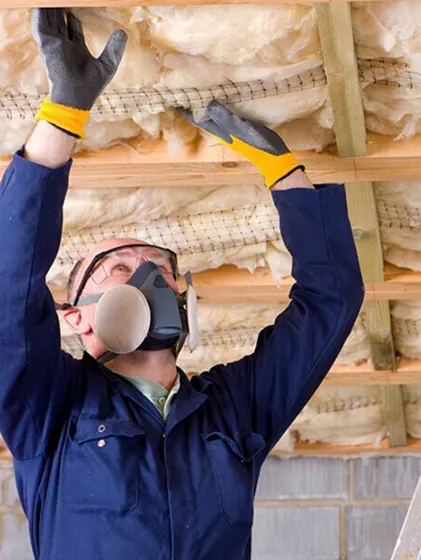
The work area should be sealed off with plastic sheeting and duct tape, and the HVAC system should be shut off during removal to prevent fibers from circulating through the home. After the job is complete, air monitoring may be performed to verify that the space is clear.
After Abatement: Restoring Your Home’s Insulation
Once a licensed contractor has cleared your home, the work isn’t finished. Removing asbestos insulation leaves gaps that need to be addressed. Without adequate insulation, your home loses the thermal protection it needs to stay comfortable and energy-efficient.
This is the point where a qualified insulation contractor steps in. Modern residential insulation services cover a range of options suited to different spaces and budgets. Blown-in insulation works well in attics and open cavities. Spray foam delivers a high level of air sealing in areas where gaps and penetrations are a concern. Batt insulation fits into structured wall and ceiling cavities. All of these are safe, asbestos-free materials with strong thermal performance.
Commercial insulation services follow a similar process at a larger scale, with materials and timelines matched to the project scope.
Ready to Move Forward After Asbestos Removal?
Getting asbestos out of your home is a significant step. Once it’s done, making sure the space is properly insulated again matters just as much. The CoreLine Insulation team works with DFW homeowners who are ready to take the next step, offering honest recommendations and certified technicians. Contact us today to get started.
FAQs
It depends on the project’s scope. Many contractors recommend vacating the affected area or the entire home during removal. The work area is sealed off, and the HVAC is shut down, so air quality in the rest of the house is a consideration worth discussing with your contractor beforehand.
Coverage varies by policy. Some insurers may cover abatement costs when asbestos damage is tied to a covered event, such as a fire or storm. Routine renovations that uncover asbestos are less likely to be covered. Reviewing your policy directly with your insurer before scheduling any work is the practical move.
Adding new insulation on top does not neutralize the risk. If the asbestos-containing material underneath is in poor condition or gets disturbed later, the hazard remains. Licensed abatement should be completed first, and new insulation should be installed only after the space has been professionally cleared.