Quick Summary
Blown-in insulation handles irregular attics and retrofit projects better than rolled insulation, making it the stronger fit for most existing DFW homes. Rolled and batt insulation holds its own in new construction with clean, open framing. Attic condition and installation complexity carry more weight than upfront material cost when deciding between the two. Neither option is universally superior, as the home itself determines the answer.
When it comes to keeping a home comfortable in the Dallas-Fort Worth heat, insulation is one of the most important decisions a homeowner can make. The type you choose affects how well your home retains heat, how much your HVAC system runs, and what you pay in energy bills month after month.
What’s the difference between blown-in insulation and rolled insulation, and which one is the better fit?
The honest answer is that it depends on your home, your attic, and what you’re trying to accomplish. This guide walks through both options so you can get a better picture.
Blown-In vs. Rolled Insulation: What Each One Does
Before comparing the two, it helps to know what you’re working with.
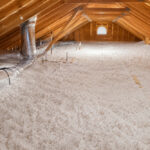
Blown-in insulation is loose-fill material (typically fiberglass or cellulose) that gets blown into place using a machine. Cellulose is largely made from recycled paper treated with a fire retardant, while fiberglass uses recycled glass content.
The material moves freely and fills in around whatever’s already in your attic, including joists, wiring, pipes, and tight corners. A professional handles the installation.
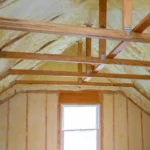
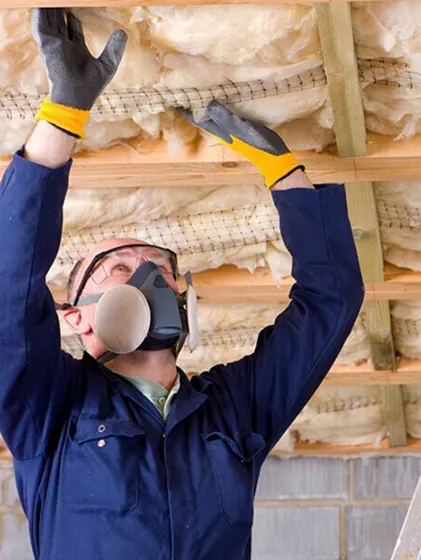
Rolled insulation (also called batt insulation when pre-cut) comes in blanket form. It’s typically made of fiberglass or mineral wool and is laid or fitted between studs and joists. It’s designed for spaces with standard framing widths, usually 16 to 24 inches. Homeowners can install it themselves in accessible areas with basic tools. Pre-cut batts are sized to fit standard framing without much trimming.
Both do the same fundamental job: slow down heat transfer. How well they do that job depends heavily on where and how they’re installed.
Coverage: Where Each Insulation Type Performs Best
This is where the two options start to diverge in meaningful ways.
Blown-in insulation covers irregular spaces well. Attics in older DFW homes rarely have perfectly uniform framing, and blown-in material fills in around every obstacle without leaving gaps. Tight corners where the roof meets the floor, areas around pipes and electrical boxes, and oddly shaped spaces all get covered the same way as open floor sections.
Rolled insulation is better suited to open, accessible spaces with predictable framing. In new construction where walls are exposed and joists are evenly spaced, batt insulation can be installed cleanly and efficiently. In those conditions, it does the job well. The challenge comes with retrofits or attics that have obstacles. Gaps form around obstructions when the material can’t be cut precisely enough to seal every edge, and those gaps reduce performance.
One practical distinction worth knowing: adding blown-in insulation to an existing wall doesn’t require tearing out drywall. Small holes get drilled into wall cavities, the material is blown in, and the holes are patched. With rolled insulation, you need access to the framing, which means removal of drywall or other finishes in a retrofit situation.
Blown-in is almost always the more practical option for residential insulation projects in DFW, where attics are already finished or partially finished.
Installation: Time, Effort, and What to Expect
The installation experience for these two options is noticeably different.
With rolled insulation:
- Installation is manual: measure, cut, fit, repeat
- Straightforward in opening new construction with accessible framing
- Retrofitting existing spaces can take significantly longer
- Cutting around obstructions like wiring or pipes requires precision to avoid gaps
- DIY is feasible in accessible areas with the right protective gear
With blown-in insulation:
- A machine does the heavy lifting; coverage is fast
- Most attic projects are completed in a matter of hours
- No drywall removal needed for retrofits
- Requires professional equipment and trained technicians
- Less mess left behind in most cases
Blown-in typically gets the job done faster and with fewer headaches on commercial insulation projects or larger residential jobs with complex attic layouts. Time on-site matters, and a job that wraps in hours rather than days creates less disruption.
Cost Considerations in the DFW Market
Cost is usually one of the first questions homeowners ask, and it’s fair to look at it honestly.
Rolled and batt insulation tends to have a lower material cost per square foot. If you’re in a new-construction scenario with open framing and installing it yourself, that cost advantage is real.
Blown-in material costs a bit more per square foot in some cases, but the labor is often faster, which can offset the higher cost. For retrofits and attics with any complexity, the total project cost between the two options tends to be closer than people expect. A larger or more irregular attic can actually make blown-in insulation the more cost-effective choice once labor is factored in.
What drives cost in both cases is the same: the size of the space, the R-value target, the condition of the existing insulation, and whether any removal or prep work is needed.
Moisture, Durability, and Long-Term Performance
DFW summers bring heat and humidity, which affect how well insulation holds up over time.
Batt insulation resists moisture reasonably well and doesn’t settle the way blown-in insulation can. If a section gets damaged or wet, you can replace that section without redoing the whole area.
Blown-in cellulose is more vulnerable to moisture retention if it gets wet. Proper attic ventilation and vapor barriers go a long way in preventing issues. Fiberglass blown-in products are often treated to be moisture and mold-resistant, making them a solid choice in humid climates like DFW.
Lifespan-wise, blown-in fiberglass is one of the longer-lasting options available. Cellulose typically has a shorter lifespan, though it performs well in the right conditions.
In most DFW attics, good ventilation is as important as the insulation itself. A poorly ventilated attic traps heat and moisture regardless of insulation type, which is part of why solar attic fans often pair well with insulation upgrades.
Soundproofing: A Side Benefit Worth Mentioning
Insulation primarily controls temperature, but it also affects how much sound travels through a home.
Blown-in insulation has a natural advantage here. Because it fills gaps seamlessly, it creates a denser barrier that reduces airborne noise moving between floors or in from outside. Batt insulation provides decent soundproofing in clean framing, but gaps around beams or in corners create pathways for sound to travel.
This isn’t usually a deciding factor, but it’s worth knowing if noise reduction is part of what you’re trying to achieve.
So Which One Is Better for Your DFW Home?
There’s no universal answer, but there are patterns worth paying attention to.
Blown-in insulation tends to be the stronger fit for:
- Existing attics with any degree of complexity or irregularity
- Retrofit projects where drywall removal isn’t practical
- Homes in DFW where attic geometry makes full coverage a challenge
- Situations where coverage speed and thoroughness matter most
Rolled insulation tends to work well for:
- New construction with open, accessible, standard-width framing
- Crawl spaces and basement ceilings with straightforward layouts
- Wall cavities in new builds before drywall goes up
- Homeowners looking to handle a simple, accessible space themselves
For most existing DFW homes, blown-in is the more practical choice. Attics in this region rarely cooperate with a clean roll-and-lay approach, and the coverage that blown-in provides is hard to replicate with batts in that kind of environment.
Making the Call: Talk to Someone Who Knows Your Attic
The best way to know which option fits your home is to have someone look at your attic and give you a straight answer. Attic conditions vary more than people realize, and what works well in one home may not be the ideal approach in another.
At CoreLine Insulation, we inspect attics, ask the right questions, and give homeowners honest recommendations based on what we see. Contact us, and we’ll set up a free estimate.
FAQs
Yes, in most cases. Blown-in material goes on top, and no vapor barrier should be trapped between the two layers. If existing insulation is damaged or heavily settled, full removal before reinstalling is the better path forward.
Cellulose blown-in is treated with borate, which deters insects. Neither insulation type is pest-proof on its own. Sealing attic entry points and maintaining proper ventilation does more to keep pests out than the choice of insulation material.
Visible settling, moisture damage, uneven coverage, or a home that struggles to hold temperature are the clearest indicators. Thin, compressed, or discolored insulation has likely lost meaningful thermal effectiveness and warrants a professional attic inspection.